Categories

How Film Thickness Affects Heavy Duty Bag Performance |NAIGU

Discover how film thickness affects heavy duty bag strength, puncture resistance, flexibility, seal integrity, and cost. Learn how to select suitable plastic bags for industrial applications.
Oct 16th,2026 51 Views
Heavy duty plastic bags are widely used in industrial packaging, factory storage, product protection, and transportation. These bags are designed to handle heavier products and demanding working conditions. However, their performance depends on several factors, including film thickness, raw material quality, bag dimensions, and manufacturing processes.
Among these factors, film thickness plays an important role in determining a bag's strength, flexibility, puncture resistance, and material consumption. Understanding how thickness affects heavy duty bag performance helps buyers select suitable products for their applications.
1. Film Thickness and Load-Bearing Capacity

Film thickness affects how a heavy duty bag responds to the weight of its contents. In general, thicker plastic film can provide greater resistance to stretching and tearing when the material and bag design remain comparable.
However, thickness alone does not determine load-bearing capacity. The type of polyethylene, material formulation, bag dimensions, and quality of the bottom and side seals also influence overall performance.
How to choose the right thickness:
  • Identify the weight and type of products being packed.

  • Consider whether the bag will hold smooth, irregular, or sharp-edged items.

  • Evaluate the expected handling and transportation conditions.

  • Test the complete bag under realistic loading conditions.

For heavy industrial products, buyers should assess the finished bag's performance rather than relying on thickness specifications alone.
2. Film Thickness and Puncture Resistance
Heavy duty bags may come into contact with hard edges, rough surfaces, or irregularly shaped products. If the film is too thin for the application, it may be more susceptible to punctures and localized damage.
Increasing thickness can improve resistance to puncture, but the result also depends on the film's toughness, flexibility, and material structure.
Practical recommendations:
  • Use thicker film when the contents have sharp edges or create concentrated pressure.

  • Consider suitable LDPE or LLDPE formulations based on the required balance of flexibility and strength.

  • Avoid excessive stretching during filling and handling.

  • Conduct puncture and drop tests when evaluating bags for demanding applications.

The best specification balances puncture resistance with cost and ease of use.
3. Film Thickness and Tear Resistance
Tearing can occur when a bag is pulled, lifted, dragged, or exposed to uneven loads. Film thickness influences tear performance, but tear resistance also depends on polymer properties, extrusion quality, and the direction in which the film is stressed.
A thicker bag may offer additional protection, but poor material quality or inconsistent film thickness can still lead to premature failure.
How to improve tear resistance:
  • Choose a suitable film formulation for the intended load.

  • Confirm thickness consistency throughout the roll.

  • Check the bag's side seams and bottom seals.

  • Avoid sharp corners and excessive stress during packing.

  • Evaluate tear resistance using representative samples.

For manufacturers and distributors, consistent quality is important for reducing product damage and customer complaints.
4. Film Thickness and Flexibility
Flexibility is another important consideration when selecting heavy duty bags. Thicker film generally requires more force to bend, fold, or stretch when other material properties remain similar.
If a bag is too stiff for the intended application, it may be less convenient to fill, close, stack, or handle. Conversely, film that is too thin may not provide sufficient protection.
How to balance thickness and flexibility:
  • Choose the film according to the shape and dimensions of the contents.

  • Consider how the bags will be filled and handled.

  • Select an appropriate polyethylene grade.

  • Test the bag under actual operating conditions before placing a large order.

The goal is to achieve sufficient strength without sacrificing practical usability.
5. Film Thickness and Bag Seal Strength
Even when the film itself is strong, a heavy duty bag can fail if its seals are weak. Bottom seals and side seals must withstand the forces generated by the contents during lifting, stacking, and transportation.
Film thickness can affect sealing conditions, but simply increasing thickness does not guarantee stronger seals. Temperature, sealing time, pressure, material compatibility, and seal design all matter.
How to improve sealing performance:
  • Optimize sealing temperature, pressure, and dwell time.

  • Ensure consistent sealing across the entire seam.

  • Check for contamination or wrinkles in the sealing area.

  • Test seal strength and finished-bag integrity.

  • Match the bag design to the intended load and application.

Reliable sealing is especially important for bags used to transport bulk materials or heavy industrial components.
6. Film Thickness and Material Cost
Film thickness directly affects the amount of plastic used to manufacture a bag of a given size and material density. Increasing thickness generally increases material consumption and cost per bag.
However, selecting the thinnest available film is not always the most economical choice. Bags that tear frequently may increase product losses, replacement costs, and packaging waste.
Buyers should consider both the purchase price and the bag's performance throughout its intended use.
For example, when comparing two bags with the same dimensions and material, a 100-micron bag generally uses about 25% more film than a 80-micron bag, assuming the same polymer density and comparable construction.
Ways to control packaging costs:
  • Define the actual performance requirements before specifying thickness.

  • Avoid unnecessary material over-specification.

  • Compare samples under equivalent testing conditions.

  • Evaluate the cost per successful packing application rather than price per bag alone.

A well-designed heavy duty bag provides the required protection while using material efficiently.
7. How to Select the Right Thickness for Heavy Duty Bags
The appropriate film thickness depends on the application, load, bag dimensions, and required durability. There is no single thickness that works for every industrial packaging requirement.
The following table provides a practical starting point for evaluating bag specifications.

Application

Key considerations

Factory storage bags

Storage duration, product weight, and handling frequency

Industrial component bags

Part shape, sharp edges, and puncture resistance

Heavy product liners

Load distribution, liner dimensions, and seal integrity

Bulk material bags

Filling method, material density, and handling conditions

Mattress and furniture bags

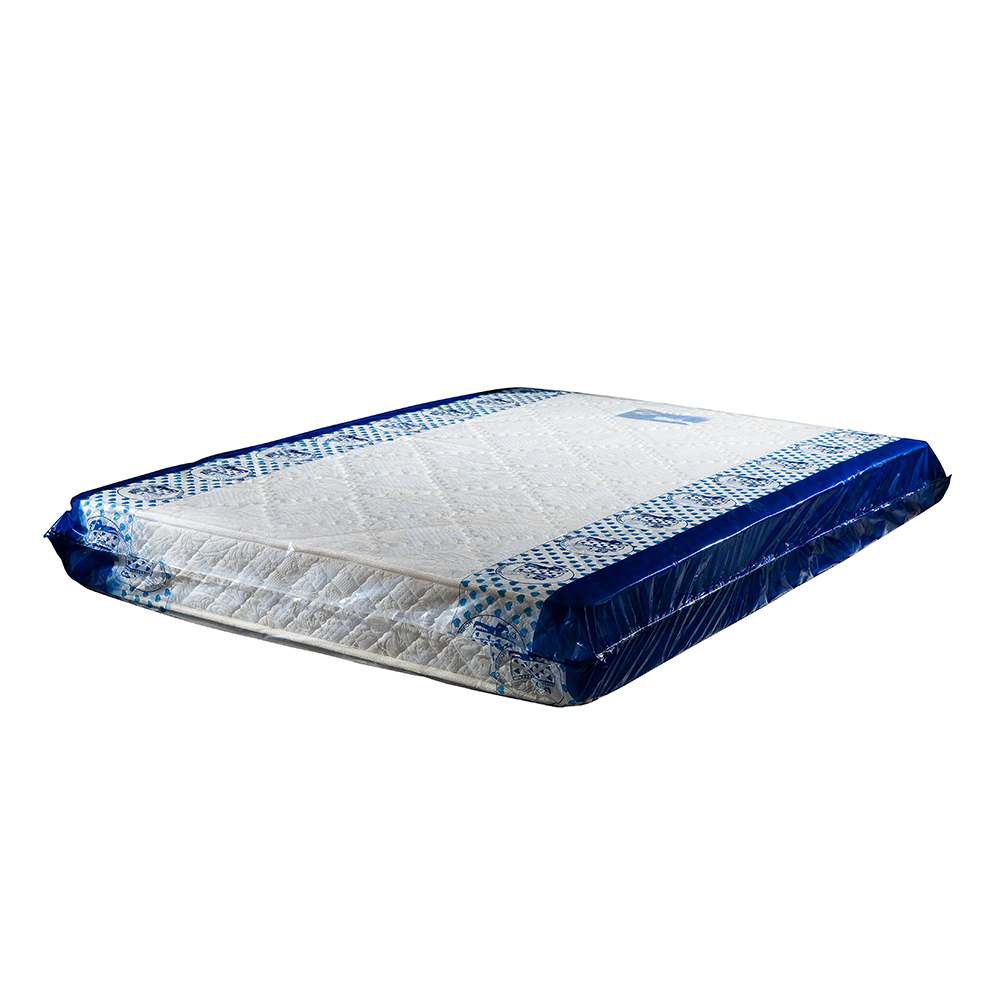
Product dimensions, surface protection, and transportation conditions

These are application categories rather than fixed thickness recommendations. The final specification should be determined through product testing and an assessment of actual working conditions.
When requesting a quotation from a heavy duty bag manufacturer, buyers should provide the bag length, width, thickness, material requirements, intended contents, quantity, and any printing or customization requirements.
8. Why Manufacturing Quality Matters
Film thickness is only one part of heavy duty bag performance. Reliable manufacturing also requires consistent raw materials, stable extrusion conditions, accurate thickness control, and effective bag-converting processes.
Manufacturers should monitor film uniformity, mechanical properties, and sealing quality to help ensure that finished bags meet the agreed specifications.
For buyers purchasing in bulk, requesting samples and confirming quality requirements before mass production can help reduce sourcing risks.
Conclusion
Film thickness affects the strength, puncture resistance, flexibility, material consumption, and overall performance of heavy duty plastic bags. However, the best thickness depends on the material formulation, bag design, contents, and working conditions.
By evaluating these factors together, buyers can select bags that provide reliable protection without unnecessary material costs.
Contact NAIGU Films
Looking for heavy duty plastic bags for industrial packaging, factory storage, or product protection?
NAIGU Films provides plastic film and bag solutions for different industrial applications. Share your required bag dimensions, film thickness, material preferences, application, and order quantity with our team to discuss a suitable solution.
Contact NAIGU Films today for customized specifications and a quotation.
📧 Email: jenney@gdnaimei.com
📱 WhatsApp/Phone: +86 13924835577
🌐 Website: https://naigufilms.com/
Leave a message
Name *
Email *
WhatsApp/Phone
Total weight (kg) *
Message *
Company Name
We use Cookie to improve your online experience. By continuing browsing this website, we assume you agree our use of Cookie.