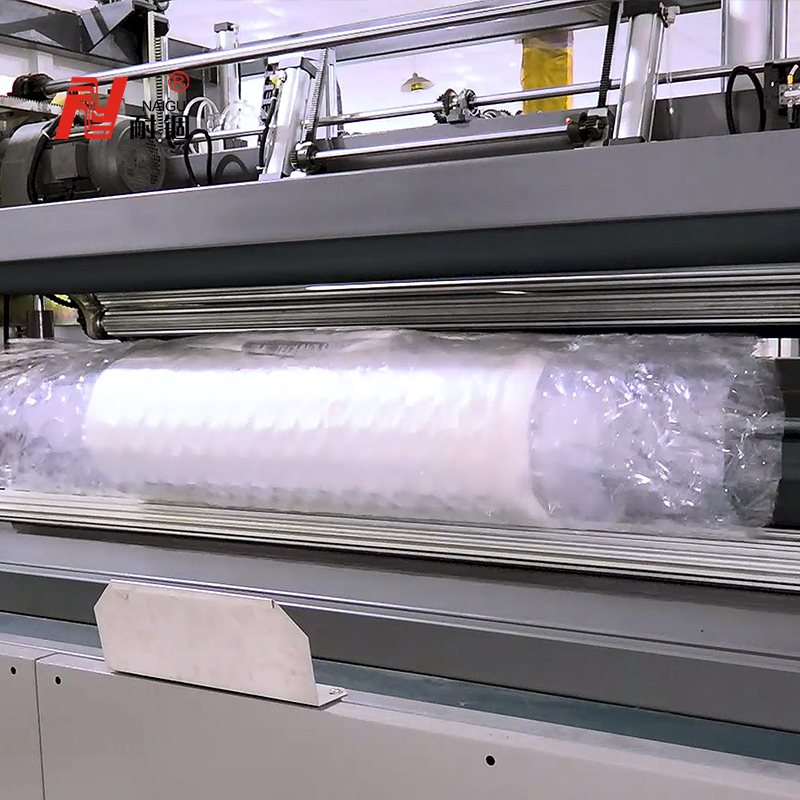
Key Benefits of High-Performance Compression Film |NAIGU
High-performance compression film helps mattress, foam, sofa, and bedding manufacturers achieve stronger, more stable, and cost-efficient packing. This article explains the key benefits of compression film, including puncture resistance, tensile strength, flexibility, sealing performance, compression stability, reduced film consumption, and compatibility with automated packing machines.
Aug 25th,2026112 Views
Compression film plays an important role in modern mattress and foam packing. For manufacturers shipping bulky products domestically or internationally, the right film can improve packing efficiency, product protection, and transportation performance.
High-performance compression film is designed to withstand the forces generated during compression, sealing, rolling, handling, and transportation. Compared with basic packing film, a properly engineered compression film can provide better consistency and reliability throughout the packing process.
What Is Compression Film?
Compression film is a plastic film used to wrap and contain products during compression packing. It is commonly used for mattresses, foam products, cushions, sofas, and other bulky goods.
For mattress manufacturers, compression film needs to maintain its integrity while the product is compressed into a smaller volume. The film must also provide reliable sealing and sufficient resistance to tearing or puncturing during transportation.
Depending on the application, compression film may be produced using PE materials such as LDPE, LLDPE, MDPE, or multilayer PE structures.
1. Better Puncture Resistance
One of the most important benefits of high-performance compression film is improved puncture resistance.
Mattresses and foam products can contain corners, edges, or structural components that create stress points during compression and transportation. Weak film may develop holes or tears when exposed to these forces.
High-performance film can provide greater resistance to punctures, helping maintain package integrity throughout handling and shipping.
2. Higher Tensile Strength
Compression packing places significant tension on the film. If the film has insufficient tensile strength, it may break during the packing process.
High-performance compression film is engineered to withstand higher tensile forces while maintaining stable performance.
This is particularly important for automated mattress compression packing machines, where film is continuously fed, stretched, sealed, and compressed at controlled speeds.
3. Excellent Elongation and Flexibility
A good compression film needs to stretch and adapt to the shape of the product.
High elongation allows the film to accommodate changes in product dimensions during compression without immediately breaking.
This flexibility can be especially valuable for mattresses and foam products with different thicknesses and densities.
4. Improved Compression Stability
After compression, the film needs to help maintain the compact shape of the finished package.
High-performance compression film can provide the strength and containment required to keep the product compressed during storage and transportation.
Stable compression can also help manufacturers achieve more consistent finished roll dimensions.
5. Reduced Film Consumption
High-performance film is not necessarily about using thicker film. In many applications, better material performance can allow manufacturers to optimize film thickness while maintaining the required packing strength.
This can reduce film consumption per mattress or foam product.
For large factories, even a small reduction in film consumption can generate meaningful savings over thousands of packed units.
6. Better Sealing Performance
Reliable sealing is essential for compression packing.
The film must form a strong seal after compression and remain sealed during transportation. Poor sealing can allow air to enter the package or cause the film to open during handling.
A compression film with suitable sealing characteristics can improve package integrity and reduce packing defects.
Film sealing performance should always be evaluated together with the sealing temperature, machine settings, and sealing system.
7. More Consistent Machine Performance
Film quality can directly affect the performance of an automated packing machine.
Inconsistent film thickness or mechanical properties may result in:
Film breakage
Uneven feeding
Poor sealing
Unstable compression
Increased material waste
Machine downtime
High-performance film with consistent specifications can help the packing process operate more smoothly.
8. Better Protection During Export Transportation
Mattresses and foam products may experience long-distance transportation, container loading, unloading, warehouse storage, and multiple handling stages.
Compression film provides an outer protective layer against dust, moisture, scratches, and general handling conditions.
For export manufacturers, reliable film performance is particularly important because products may remain packed for extended periods before reaching the final customer.
9. Suitable for Automated Compression Packing
Modern mattress factories are increasingly adopting automated compression roll packing systems.
These machines require film with specific characteristics, including:
Suitable width
Controlled thickness
Stable tensile strength
Appropriate elongation
Reliable sealing performance
Consistent feeding properties
When film specifications are matched correctly with the machine, manufacturers can achieve more stable production and reduce unnecessary film waste.
10. Supports Different Mattress and Foam Applications
High-performance compression film can be developed for different product requirements.
Potential applications include:
Foam mattresses
Spring mattresses
Latex mattresses
Memory foam products
Sofa cushions
Foam blocks
Bedding products
Other compressible products
The ideal film specification depends on product dimensions, density, compression ratio, packing method, and transportation conditions.
How to Choose High-Performance Compression Film
Manufacturers should evaluate several technical factors before selecting compression film:
Film Thickness
Choose a thickness that provides sufficient strength without unnecessary material consumption.
Tensile Strength
Higher tensile strength can improve resistance to stress during compression and transportation.
Elongation
Appropriate elongation allows the film to adapt to changes in product dimensions.
Puncture and Tear Resistance
These properties are important for products with sharp edges or high mechanical stress.
Sealing Performance
The film should be compatible with the machine's sealing temperature and sealing process.
Film Structure
Multilayer PE film can provide a combination of strength, flexibility, and sealing performance.
Machine Compatibility
Always test film with the actual compression packing machine before large-scale production.
Compression Film and Overall Packing Costs
Film price per kilogram is only one part of the total cost.
Manufacturers should also consider:
Film consumption + Packing speed + Film waste + Product protection + Transportation efficiency
A slightly higher-quality film may provide better overall economics if it reduces breakage, improves machine efficiency, lowers film consumption, or increases production stability.
For high-volume mattress manufacturers, evaluating the total packing cost per unit is more useful than comparing film prices alone.
Conclusion
High-performance compression film can provide significant benefits for mattress, foam, sofa, and bedding manufacturers. Better puncture resistance, tensile strength, elongation, sealing performance, compression stability, and machine compatibility can help manufacturers achieve more reliable packing.
The right compression film can also contribute to lower material consumption, fewer packing defects, improved production efficiency, and better protection during international transportation.
Contact NAIGU to discuss your compression film requirements, including product type, dimensions, film thickness, packing machine, and production volume.