Categories

Choosing the Right Film Thickness for Furniture Protection |NAIGU

Learn how to choose the right PE film thickness for furniture protection based on product size, surface materials, transportation conditions, and packing methods.
Oct 22nd,2026 50 Views
Choosing the Right Film Thickness for Furniture Protection
Furniture manufacturers, distributors, and exporters need reliable protective film to keep products clean and intact during storage, handling, and transportation. Choosing the right film thickness is essential for balancing protection, flexibility, material consumption, and packing costs.
However, thicker film is not always the best choice. The ideal thickness depends on furniture dimensions, surface characteristics, packing methods, and transportation conditions.
1. Why Film Thickness Matters for Furniture Protection
Film thickness directly affects the performance of protective packaging. Selecting an unsuitable thickness may lead to tearing, punctures, or unnecessary material costs.
The right film thickness helps manufacturers:
  • Reduce the risk of scratches, dust, and moisture exposure.
  • Improve resistance to punctures and tearing during handling.
  • Maintain stable packing around furniture of different shapes.
  • Control material consumption and packaging expenses.
  • Support more consistent packing quality for domestic and export shipments.
For furniture factories handling large production volumes, choosing the appropriate film specification can improve both product protection and packing efficiency.
2. Recommended Film Thickness for Different Furniture Applications
Different furniture products require different levels of protection. The following ranges are general starting points for PE protective film and should be validated through application testing.
Furniture Application
Suggested Film Thickness
Main Considerations
Lightweight furniture and small components
20–40 μm
Basic dust and surface protection
Chairs, tables, and cabinet panels
30–60 μm
Handling resistance and surface coverage
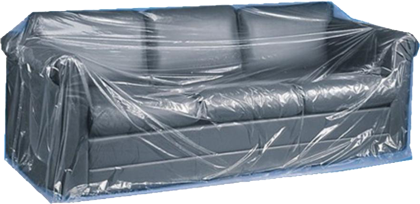
Sofas and upholstered furniture
40–80 μm
Product size, corners, and handling conditions
Large or heavy furniture
60–100 μm or more
Load conditions, sharp edges, and transportation risks
These ranges are indicative rather than universal standards. Actual requirements vary with film formulation, film structure, packing design, and the level of protection required. Stretch film, shrink film, and PE protective covers may also require different specifications.
3. Key Factors When Selecting Film Thickness
Furniture Weight and Dimensions
Large and heavy furniture generally requires stronger protective packaging, especially when products are stacked or handled frequently. However, weight alone does not determine the required thickness. Contact points, sharp corners, and the way furniture is lifted can have a greater influence on film damage.
Surface Characteristics
Wooden panels, metal frames, upholstered sofas, and furniture with decorative finishes have different protection requirements. Smooth surfaces may need dust and scratch protection, while products with protruding parts may require thicker film or additional corner protection.
Storage and Transportation Conditions
Furniture transported over long distances may experience repeated loading, unloading, stacking, and friction. Export shipments can require more robust protection than products moved directly to nearby retailers.
For demanding transportation conditions, manufacturers should evaluate puncture resistance, tear strength, and sealing performance rather than relying on thickness alone.
Packing Method and Equipment
Manual wrapping, stretch wrapping, shrink packing, and vacuum compression packing place different demands on film.
For sofa compression and roll packing, film must withstand the compression process and maintain package integrity after sealing. Manufacturers should confirm that the selected film is compatible with the machine's operating parameters and the furniture materials.
4. Is Thicker Film Always Better?
Not necessarily. Increasing film thickness may improve mechanical strength, but it can also increase material consumption and packing costs.
Excessively thick film may be unnecessary for lightweight furniture or short-distance delivery. Conversely, film that is too thin may tear during handling and lead to product exposure or repacking.
A more effective approach is to select the thinnest film that consistently meets the required protection standards under actual operating conditions.
Furniture manufacturers can compare several film thicknesses by evaluating:
  • Puncture and tear resistance.
  • Film flexibility and sealing performance.
  • Package integrity after handling tests.
  • Material consumption per furniture unit.
  • Total packing cost and damage-related expenses.
5. How to Test and Optimize Furniture Protective Film
Before placing a bulk order, manufacturers should conduct practical trials using representative furniture products.
First, identify the product dimensions, weight, surface materials, and expected transportation conditions. Next, test different film thicknesses under the same packing conditions.
Inspect the finished packages for tears, loose wrapping, damaged seals, and exposed surfaces. Where compression packing is involved, also check whether the film maintains its integrity after compression and during storage.
Recording the results helps manufacturers establish a reliable film specification for each product category instead of applying one thickness to every item.
6. Custom PE Film Solutions for Furniture Manufacturers
Standard film specifications may not meet every furniture factory's requirements. Custom PE protective film can be developed according to product dimensions, required thickness, transparency, film strength, and packing equipment.
NAIGU Films provides PE film solutions for furniture protection and industrial packing applications. By discussing product characteristics, packing methods, order quantities, and transportation requirements, buyers can identify a suitable specification for their production needs.
For furniture manufacturers operating automatic packing lines or sofa compression roll packing machines, confirming film compatibility before mass production helps maintain stable packing performance and reduce material waste.

Conclusion
Choosing the right film thickness for furniture protection requires balancing product safety, film performance, packing efficiency, and cost. Furniture dimensions, surface characteristics, transportation conditions, and packing equipment should all be considered.
Rather than automatically choosing thicker film, manufacturers should test suitable specifications under real working conditions and select the most cost-effective option that provides consistent protection.
Contact NAIGU Films to discuss customized PE film solutions for furniture protection, sofa packing, and other industrial applications.
📧 Email: jenney@gdnaimei.com
📱 WhatsApp/Phone: +86 13924835577
🌐 Website: https://naigufilms.com/
Leave a message
Name *
Email *
WhatsApp/Phone
Total weight (kg) *
Message *
Company Name
We use Cookie to improve your online experience. By continuing browsing this website, we assume you agree our use of Cookie.