Categories

Film Selection for Foam Export Transportation |NAIGU

Learn how proper PE film selection helps foam manufacturers protect products, improve packing efficiency, manage moisture risks, and optimize export transportation costs.
Oct 21st,2026 50 Views
Foam products are widely used in furniture manufacturing, mattress production, automotive interiors, packaging, and other industrial applications. For foam manufacturers exporting products to international markets, selecting the right packing film is an important step in protecting product quality, improving loading efficiency, and managing transportation costs.
Foam materials are often lightweight, bulky, and easy to deform under pressure. During export transportation, they may be exposed to dust, moisture, friction, compression, and repeated handling. Without suitable protective packaging, these factors can affect product cleanliness, appearance, and delivery condition.
Choosing the right PE film and packing method helps foam manufacturers prepare products for long-distance transportation while making better use of storage and shipping space. This article explains the main factors to consider when selecting film for foam export transportation.
1. Why Film Selection Matters for Foam Exports
Foam products have different physical characteristics from many other industrial goods. Their low density and large volume can make transportation expensive, while their soft structure may require special handling and packing considerations.
Proper film selection supports foam export transportation in several ways.
Protecting Foam from Dust and Contamination
Foam products can collect dust and other contaminants during production, storage, loading, and transportation. Suitable PE film provides a protective barrier that helps keep foam surfaces clean before the products reach overseas customers.
This is especially important for foam used in mattresses, upholstered furniture, cushions, and other applications where cleanliness is a product quality consideration.
Reducing Moisture Exposure
Moisture exposure during storage and transportation may affect foam products, particularly when condensation develops inside containers or storage areas.
PE film can help limit direct contact with external moisture, but it does not eliminate condensation risks. Foam should be adequately conditioned before packing, and exporters should consider container conditions, ventilation, humidity, and transportation duration.
For long-distance shipments, a complete moisture management plan is more effective than relying on film alone.
Maintaining Product Appearance
Foam may be scratched, marked, or contaminated through repeated contact with other goods and handling surfaces. Properly selected film helps reduce these risks and supports more consistent product presentation when shipments arrive.
However, protective film should not be expected to prevent every form of mechanical damage. Additional cushioning, suitable stacking, or protective outer packaging may be necessary for sensitive products.
2. How Different Foam Products Affect Film Requirements
Not all foam products require the same packing specifications. Material density, dimensions, shape, and intended use all influence the appropriate film selection.
Flexible Foam Blocks and Sheets
Large foam blocks and sheets often require wide film or bags that accommodate their dimensions without excessive stretching. Film should provide adequate tear resistance during wrapping, handling, and loading.
For products supplied in standard sizes, customized PE film widths can help reduce excess material and improve packing consistency.
Foam Rolls
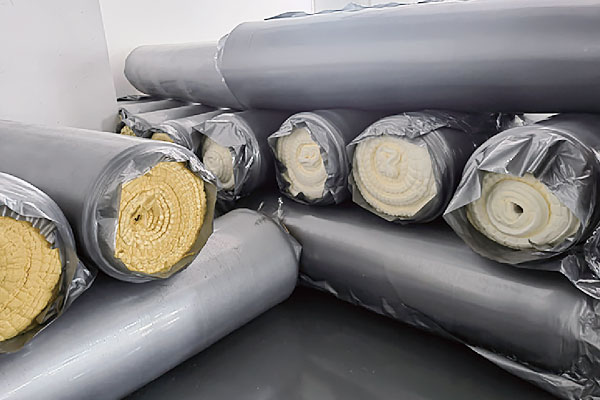
Foam rolls are commonly used in mattress manufacturing, upholstery, and furniture production. Their cylindrical shape requires film that can accommodate the roll diameter and maintain suitable coverage during handling.
Depending on the application, manufacturers may use PE film bags, roll wrapping, or automated roll-packing solutions. Film thickness, flexibility, and sealing performance should be matched to the roll dimensions and packing method.
Cut Foam Components
Foam components supplied in specific shapes or sizes may require individual bags or grouped packing. Clear PE film can help workers identify the contents, while printed labels can provide product codes, dimensions, or order information.
For customized components, packing specifications should account for sharp corners, irregular edges, and the possibility of film tearing during handling.
3. Key Factors When Choosing Film for Foam Export Transportation
Selecting film based only on price or thickness may lead to unnecessary material costs or inadequate protection. Exporters should evaluate the complete set of packing requirements.
Film Thickness
Film thickness affects material consumption, flexibility, and resistance to tearing and puncturing. Thicker film may be appropriate for bulky products or demanding handling conditions, but increasing thickness does not automatically guarantee better packing performance.
Manufacturers should select a suitable thickness based on foam weight, product dimensions, packing equipment, and transportation conditions.
Tensile Strength and Tear Resistance
Foam packages may be moved repeatedly during warehouse operations, container loading, and unloading. Film with suitable tensile strength and tear resistance helps withstand normal handling forces.
If the film frequently tears around corners or during wrapping, manufacturers should review the material grade, thickness, film quality, and packing method together.
Film Width and Dimensions
Incorrect film dimensions can create unnecessary waste or make packing difficult.
For large foam blocks and sheets, wider film may improve coverage and reduce the need for multiple pieces. For foam rolls, the required width depends on the roll circumference, overlap, sealing method, and machine configuration.
Customized film dimensions can help manufacturers standardize their packing process when they handle consistent product sizes.
Transparency and Printing
Transparent PE film allows workers to identify foam products and inspect their general appearance without fully removing the protective covering. This can be useful when multiple foam specifications are stored or shipped together.
Printed film or labeled bags can also display product codes, company branding, and handling information. The choice between transparent and printed film depends on identification needs, branding objectives, and budget.
Sealing Performance
For bags and automated packing applications, reliable sealing is important for maintaining package integrity. Film must be compatible with the sealing temperature, equipment speed, and packaging structure.
Before placing a large order, manufacturers should test the selected film under actual packing conditions to confirm that it feeds, seals, and handles properly.
4. How Compression Packing Can Improve Foam Export Efficiency
One major challenge in foam transportation is the amount of space required for lightweight, bulky products. In suitable applications, compression packing can reduce package volume and improve shipping efficiency.
By compressing foam before packing, manufacturers may be able to load more products into a storage area or shipping container. However, the achievable reduction depends on foam density, material structure, product dimensions, and recovery characteristics.
Film selection is especially important in compression packing because the material must withstand the packing process and maintain package integrity.
Film Requirements for Compressed Foam
When foam is compressed, the film may experience additional stress during sealing, handling, and storage. Manufacturers should consider:
  • Sufficient resistance to tearing and puncturing.
  • Compatibility with compression and sealing equipment.
  • Suitable dimensions for the compressed package.
  • Reliable seals under the specified packing conditions.
  • Appropriate performance during storage and transportation.
Film that works well for ordinary foam covering may not be suitable for high-compression applications. Testing is recommended before switching to a different film specification.
Balancing Compression and Product Recovery
Foam must be able to recover appropriately after unpacking when the application requires it. Excessive compression or unsuitable storage conditions may affect recovery performance, depending on the foam type and the duration of compression.
Manufacturers should follow the foam supplier's compression and storage recommendations, and verify product recovery after transportation simulations where appropriate.
5. Preventing Common Packing Problems During Export
Even when the correct film material is selected, poor packing practices can create problems during international transportation.
Film Tearing During Handling
Tears can occur when film is too thin for the application, when package edges create concentrated stress, or when wrapping tension is excessive.
To reduce this risk, manufacturers should test film strength, optimize wrapping tension, and use suitable corner protection when necessary.
Moisture and Condensation Inside Containers
Temperature changes during international shipping can cause condensation inside containers. Moisture may accumulate even when foam is covered with plastic film.
Exporters should ensure foam is dry before packing, inspect container conditions, use appropriate moisture-control measures when needed, and avoid treating sealed plastic film as a complete humidity-control solution.
Excessive Packing Material Consumption
Using film that is unnecessarily thick or oversized can increase material costs and waste. Conversely, reducing thickness too aggressively can result in package failures.
A practical approach is to test several suitable specifications and compare protection performance, material consumption, packing speed, and damage rates.
Inconsistent Packing Quality
Differences in bag dimensions, wrapping tension, and sealing conditions can lead to inconsistent packages.
Standardized packing procedures and regular inspection help maintain quality across production batches. For high-volume foam factories, compatible automatic packing equipment can further improve consistency.
6. How to Calculate the Cost Benefits of Better Film Selection
The lowest film price per kilogram does not always produce the lowest overall packing cost. Exporters should evaluate film consumption alongside labor, packing efficiency, shipping volume, and product damage.
A practical comparison can include the following factors:
Cost factor
What to evaluate
Film cost
Price per kilogram and total material consumption
Packing labor
Time required to wrap, seal, and prepare each package
Material waste
Excess film, rejected bags, and damaged packaging
Transportation
Package dimensions and container utilization
Product damage
Costs associated with damaged or contaminated foam
Packing efficiency
Output per shift and consistency between batches
For example, a slightly more expensive film may provide better tear resistance and reduce packaging failures. If it also enables more consistent machine operation, the total packing cost may be lower despite the higher material price.
Similarly, compression packing may reduce shipping volume for suitable foam products, but the financial benefit should be calculated using actual package dimensions, container capacity, freight rates, and product recovery requirements.

7. A Practical Checklist Before Ordering Foam Packing Film
Before requesting a quotation from a film supplier, foam manufacturers should prepare the following information:
  1. Product details: Foam type, density, dimensions, and whether products are supplied as blocks, sheets, rolls, or cut components.
  2. Packing method: Manual wrapping, bag packing, compression packing, or automatic roll packing.
  3. Film specifications: Required material, thickness, width, transparency, printing, and sealing requirements.
  4. Transportation conditions: Shipping duration, container loading method, storage environment, and expected handling conditions.
  5. Order requirements: Estimated monthly consumption, order quantity, and preferred roll or bag format.
  6. Performance testing: Required tear resistance, sealing performance, package integrity, and foam recovery after unpacking.
Providing these details helps the supplier recommend a more appropriate specification and reduces the risk of ordering film that does not match the production process.
Conclusion
Proper film selection plays an important role in protecting foam products during export transportation. Suitable PE film helps reduce dust contamination, supports product identification, and improves packing consistency. When combined with appropriate wrapping, sealing, and moisture management, it can help manufacturers prepare foam products for international delivery.
For bulky foam products, compression packing may also improve space utilization and reduce transportation costs when the material is suitable for compression.
The most effective solution depends on the foam's physical properties, packing method, transportation conditions, and overall cost requirements. By testing film performance and evaluating total packing costs rather than unit price alone, foam manufacturers can develop a more reliable and economical export packing process.
NAIGU provides PE film solutions for mattress, furniture, and industrial packing applications. Contact NAIGU to discuss customized film dimensions, thickness, and packing requirements for your foam products.
📧 Email: jenney@gdnaimei.com
📱 WhatsApp/Phone: +86 13924835577
🌐 Website: https://naigufilms.com/

Leave a message
Name *
Email *
WhatsApp/Phone
Total weight (kg) *
Message *
Company Name
We use Cookie to improve your online experience. By continuing browsing this website, we assume you agree our use of Cookie.