Categories

How Agricultural Film Helps Manage Temperature and Humidity |NAIGU

Discover how agricultural film helps regulate temperature, manage humidity, conserve soil moisture, and protect crops. Learn about greenhouse film, mulch film, UV resistance, and film selection.
Oct 13th,2026 83 Views
Agricultural film plays an important role in modern farming by helping growers manage temperature, humidity, and growing conditions. Commonly used in greenhouses, tunnels, and soil mulching applications, agricultural plastic film can help protect crops from unfavorable weather, reduce water loss, and create a more controlled growing environment.
However, different crops, climates, and farming methods require different film properties. Selecting the right agricultural film is essential for achieving reliable performance and supporting healthy crop development.
1. How Agricultural Film Helps Regulate Temperature
Temperature management is one of the main functions of agricultural film. Greenhouse and tunnel films allow sunlight to enter while helping retain heat, depending on their optical properties, thickness, and structure.
During cooler periods, greenhouse film can help reduce heat loss and maintain a warmer environment for crops. This can support early planting and extend the growing season in suitable climates.
In hot regions, excessive heat can become a challenge. Film with appropriate light-diffusion or infrared-control properties may help manage solar radiation and reduce nighttime heat loss where required. Ventilation and shading systems are also important for preventing overheating.
When choosing agricultural film, growers should consider local climate conditions, crop temperature requirements, and the type of growing structure.
2. The Role of Agricultural Film in Humidity Management
Humidity affects plant growth, water use, and the risk of certain crop diseases. Agricultural film influences humidity by limiting air exchange, reducing evaporation from covered soil, and changing how moisture moves within a growing environment.
For greenhouse applications, film can help retain moisture and reduce exposure to dry outdoor air. However, high humidity and condensation may develop when ventilation is insufficient or temperature differences cause water vapor to condense on the film surface.
Excessive humidity can encourage fungal diseases in susceptible crops. Growers should therefore combine suitable film selection with proper ventilation, irrigation management, and air circulation.
Anti-drip or anti-condensation treatments may help reduce the formation of large water droplets on certain greenhouse films. Their effectiveness depends on film formulation, treatment durability, and operating conditions.
3. How Different Agricultural Films Affect Growing Conditions
Different agricultural film types serve different purposes. The right choice depends on whether the goal is to regulate greenhouse temperature, conserve soil moisture, or protect crops from environmental stress.
  • Greenhouse film: Used to cover greenhouse structures and help manage light transmission, heat retention, and growing conditions.

  • Tunnel film: Helps protect crops from wind, rain, and temperature fluctuations while supporting season extension.

  • Mulch film: Covers the soil surface to reduce evaporation, suppress weeds when appropriately selected, and influence soil temperature.

  • UV-resistant agricultural film: Designed to improve resistance to ultraviolet exposure and support film durability under suitable outdoor conditions.

  • Light-diffusing film: Distributes incoming sunlight more evenly, depending on its optical characteristics, which may help reduce localized shading and intense direct light.

Not every film provides the same temperature or moisture-control benefits. Buyers should evaluate the film's intended application rather than relying on general product descriptions alone.
4. Why Film Thickness and Material Properties Matter
Agricultural film thickness affects mechanical strength, flexibility, light transmission, and service life, although performance also depends on resin formulation and manufacturing quality.
Thicker film may provide greater resistance to certain forms of mechanical damage, but it is not automatically the best option for every application. Film that is too thick can increase material costs, while film that is too thin may not withstand local weather conditions or the intended service period.
When evaluating agricultural film, growers should consider:
  • Thickness: Select according to the structure, expected service life, and environmental exposure.

  • Light transmission: Ensure suitable sunlight reaches the crops.

  • UV resistance: Consider the intensity of sunlight and expected outdoor exposure.

  • Thermal properties: Evaluate whether heat retention or reduced heat loss is required.

  • Condensation behavior: Consider anti-drip properties where water droplets could affect crops.

  • Mechanical strength: Assess resistance to wind, stretching, punctures, and installation stress.

These specifications should be matched to local conditions and crop requirements.
5. How Agricultural Film Helps Conserve Water
Water conservation is another important benefit of agricultural film, particularly in regions with limited rainfall or high evaporation rates.
Mulch film covers the soil surface and can reduce direct evaporation, helping maintain soil moisture between irrigation cycles. Depending on the film color and properties, it can also influence soil temperature and weed growth.
Greenhouse film can reduce direct exposure to wind and rainfall, allowing growers to manage irrigation more precisely. However, covered growing environments still require appropriate drainage, ventilation, and irrigation planning.
The water-saving effect depends on crop type, soil conditions, climate, irrigation practices, and the selected film.
6. How to Choose Agricultural Film for Different Climates
Climate conditions should guide film selection because temperature, humidity, solar radiation, and rainfall vary considerably by region.
Hot and sunny climates: Growers may prioritize suitable light transmission, heat management, and UV resistance. Ventilation and shading can be essential for controlling excessive temperatures.
Cold climates: Greenhouse films with appropriate thermal properties may help reduce heat loss and maintain more stable growing conditions.
Humid climates: Condensation management, ventilation, and resistance to the local environmental conditions should be considered together.
Dry climates: Mulch film may help reduce soil moisture loss, while greenhouse systems can support more controlled irrigation.
Before placing a large order, growers should confirm film specifications with the supplier and evaluate performance under their actual growing conditions.
7. What Information Should Buyers Provide When Ordering Agricultural Film?
To obtain an accurate quotation and suitable product recommendation, buyers should prepare the following details:
  1. Application: Greenhouse covering, tunnel covering, soil mulching, or another agricultural use.

  2. Film dimensions: Required width, thickness, and roll length.

  3. Material requirements: Relevant PE material specifications and any special formulation requirements.

  4. Climate conditions: Typical temperatures, sunlight intensity, rainfall, and expected outdoor exposure.

  5. Functional requirements: Such as UV resistance, light diffusion, thermal performance, or anti-drip properties.

  6. Expected service life: The intended use period and replacement schedule.

  7. Order quantity: Estimated quantity in kilograms or rolls.
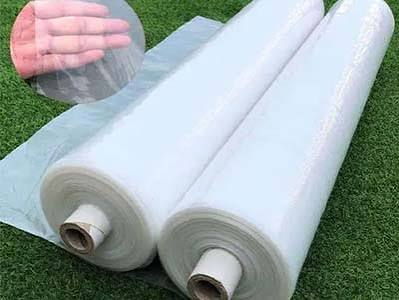
Providing these details helps suppliers identify suitable film options and reduce specification errors.
Conclusion
Agricultural film helps farmers manage temperature and humidity by influencing heat retention, sunlight transmission, soil evaporation, and moisture movement. When selected for the right application, it can support more consistent growing conditions, improve water management, and protect crops from environmental stress.
For the best results, agricultural film should be selected according to local climate, crop requirements, growing structure, and expected service life. Combining suitable film with effective ventilation, irrigation, and crop management is essential for maintaining a balanced growing environment.

Contact NAIGU Films
NAIGU Films provides customized PE film solutions for agricultural and industrial applications. We can help buyers evaluate film thickness, width, roll specifications, and relevant performance requirements according to their intended use.
Looking for agricultural film for your growing environment? Contact our team with your application, required dimensions, local climate conditions, and estimated order quantity to discuss a suitable solution.
📧 Email: jenney@gdnaimei.com
📱 WhatsApp/Phone: +86 13924835577
🌐 Website: https://naigufilms.com/
Leave a message
Name *
Email *
WhatsApp/Phone
Total weight (kg) *
Message *
Company Name
We use Cookie to improve your online experience. By continuing browsing this website, we assume you agree our use of Cookie.