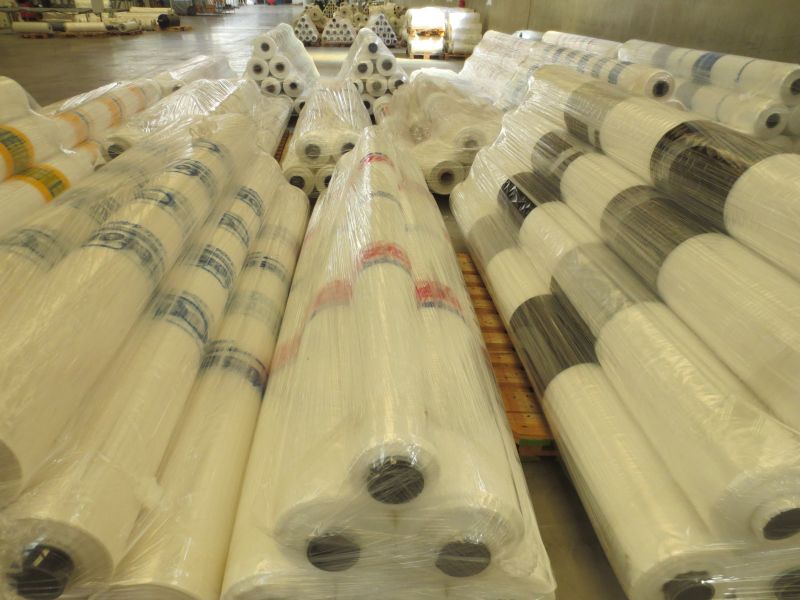
How Mattress Packing Film Protects Products During Long-Distance Shipping |NAIGU
Learn how mattress packing film protects mattresses from dust, moisture, friction, and handling damage during long-distance shipping and storage
Sep 3rd,202613 Views
Long-distance shipping exposes mattresses to many risks, including dust, moisture, friction, compression, handling damage, and changing storage conditions. For mattress manufacturers and exporters, choosing the right mattress packing film is an important part of protecting product quality from the factory to the final destination.
High-quality PE packing film creates a protective barrier around the mattress while supporting efficient packing and transportation. When properly selected and used with suitable mattress packing equipment, the film can help manufacturers reduce product damage, improve packing efficiency, and maintain a clean appearance throughout the shipping process.
1. Protecting Mattresses from Dust and Dirt
Mattresses may pass through multiple environments during international transportation. They can be stored in factories, warehouses, containers, distribution centers, and retail facilities before reaching the customer.
A properly sealed mattress packing film helps prevent dust and dirt from coming into direct contact with the mattress surface. This is especially important for mattresses with light-colored fabrics or premium covers, where even minor contamination can affect product presentation.
Transparent PE film also allows manufacturers, distributors, and warehouse workers to identify the mattress without removing the outer packing.
2. Reducing Moisture Exposure During Transportation
Humidity and condensation can be major concerns during long-distance shipping, especially when mattresses are transported by sea or stored in areas with changing temperatures.
PE mattress packing film provides a moisture-resistant outer barrier that helps reduce the mattress's exposure to external humidity and water droplets. Although packing film cannot replace proper container ventilation or moisture-control practices, it provides an additional layer of protection during transportation and storage.
For exporters shipping mattresses across different climates, selecting a film with suitable thickness and sealing performance can improve overall packing reliability.
3. Minimizing Friction and Surface Damage
Mattresses may move, slide, or come into contact with other products during loading, unloading, and transportation. Without suitable outer protection, friction can cause marks, scratches, or contamination on the mattress cover.
Mattress packing film creates a smooth protective layer around the product. This helps reduce direct contact between the mattress surface and surrounding objects during handling.
For factories using automated or semi-automatic packing equipment, consistent film quality is particularly important because the film needs to withstand stretching, folding, sealing, and other packing operations.
4. Improving Protection for Compressed Mattresses
Compressed mattresses are increasingly used for e-commerce, export, and space-saving transportation. During compression roll packing, the mattress is compressed and rolled into a smaller package.
In this application, the packing film needs to provide sufficient strength and flexibility to maintain package integrity after compression. A suitable film can help keep the compressed mattress securely packed during transportation while reducing the risk of film tearing.
The correct combination of mattress compression equipment and packing film can also help manufacturers create compact packages that are easier to handle and store.
5. Supporting Efficient Container Loading
One major advantage of mattress compression packing is the ability to reduce the volume of individual mattresses. Smaller packages can help manufacturers make better use of warehouse and container space.
However, efficient space utilization also depends on reliable outer packing. If the film is too weak or inconsistent, damaged packages may create additional handling problems.
High-performance mattress packing film helps maintain stable packages during loading and unloading, supporting more efficient transportation operations.
6. Protecting Products During Repeated Handling
International shipments often involve several handling stages. A mattress may be moved from the production line to a warehouse, loaded into a container, unloaded at a destination port, transferred to a distribution center, and finally delivered to a customer.
Each handling stage creates opportunities for packaging damage.
A durable mattress packing film provides an additional protective layer against everyday handling conditions. Good film performance can help reduce punctures, tears, and package opening during normal transportation.
7. Choosing the Right Film Thickness
Film thickness is an important factor when selecting mattress packing film. A film that is too thin may not provide sufficient protection for certain mattress sizes, weights, or transportation conditions. On the other hand, unnecessarily thick film can increase material consumption and packing costs.
The ideal thickness depends on factors such as:
Mattress size and weight
Mattress type
Compression ratio
Packing machine
Transportation distance
Handling conditions
Storage environment
Required film strength
Manufacturers should evaluate actual packing performance rather than selecting film based on thickness alone. Tensile strength, puncture resistance, elongation, sealing performance, and consistency are also important.
8. Why Film Quality Matters for Automatic Packing
Automatic mattress packing machines require film with consistent dimensions and mechanical properties. Variations in film width, thickness, or strength can affect machine operation and package quality.
High-quality film should run smoothly through the packing equipment while maintaining stable tension and reliable sealing.
For high-volume mattress factories, using compatible film can help reduce packing interruptions and improve production efficiency.
9. PE Film for Different Mattress Packing Applications
Different mattress products may require different packing solutions. Standard mattresses, foam mattresses, spring mattresses, and compressed roll-packed mattresses can have different requirements.
PE film is widely used because it combines flexibility, moisture resistance, transparency, and mechanical strength. Manufacturers can select suitable film specifications according to their product and packing process.
For customized requirements, factors such as film width, thickness, roll length, material structure, transparency, and printing can also be considered.
10. How to Improve Mattress Protection During Long-Distance Shipping
Choosing quality film is only one part of a reliable mattress packing solution. Manufacturers should also consider the complete packing process.
Recommended practices include:
Select film with suitable strength and thickness.
Match the film specification with the packing machine.
Maintain stable film tension during packing.
Ensure reliable sealing and closure.
Avoid excessive film stretching that may cause premature failure.
Store unused film in a suitable environment.
Check packed mattresses before container loading.
Use appropriate container loading methods to minimize excessive movement.
Combining suitable film with proper packing procedures can significantly improve package stability during long-distance transportation.
Conclusion
Long-distance shipping can expose mattresses to dust, moisture, friction, repeated handling, and other transportation challenges. Mattress packing film provides an important protective barrier that helps maintain product cleanliness, package integrity, and overall presentation from the factory to the destination.
For mattress manufacturers and exporters, the best results come from matching the film with the mattress type, packing method, machine, and transportation requirements. Whether the factory uses conventional mattress packing or compression roll packing, selecting the right PE film can contribute to safer transportation and more efficient logistics.
NAIGU provides mattress packing machines and PE packing film solutions designed for different mattress packing applications. Contact our team to discuss your mattress size, packing method, film specifications, and production requirements.